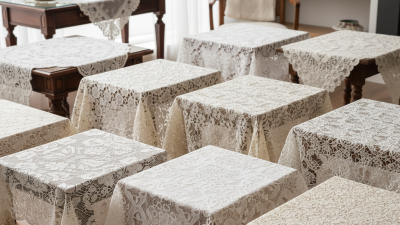
Choosing the right Lace Tablecloths for wholesale requires more than admiring a delicate pattern. Buyers must examine fiber content, lace density, dimensions, edge finishing, and washing performance. A beautiful cloth can still disappoint when its corners curl after laundering. Small details matter.
During product sampling, I look closely at the hem, stitching, and package presentation. I also compare table coverage on round, square, and banquet tables. Retail customers notice uneven borders quickly. Wholesale buyers should request fabric samples before placing large orders. Confirm minimum order quantities, production time, color consistency, and carton protection. These practical checks reduce expensive surprises.
The textile designer William Morris offered a useful standard: “Have nothing in your houses that you do not know to be useful, or believe to be beautiful.” His words fit Lace Tablecloths perfectly. Decorative appeal should meet daily performance. Cotton lace may feel familiar and washable, while polyester blends often provide stronger shape retention. Neither option is automatically best. It depends on the buyer’s market, price point, and care expectations.
This guide reviews ten wholesale-friendly styles using those criteria. The selection considers visual charm, construction quality, versatility, and realistic resale potential. It is not a flawless ranking. Supplier changes, seasonal colors, and inconsistent batches can affect results. That uncertainty deserves attention. A low price may look attractive initially, yet weak stitching can create returns and damaged trust. The strongest choice balances elegance, durability, reliable supply, and customer expectations.
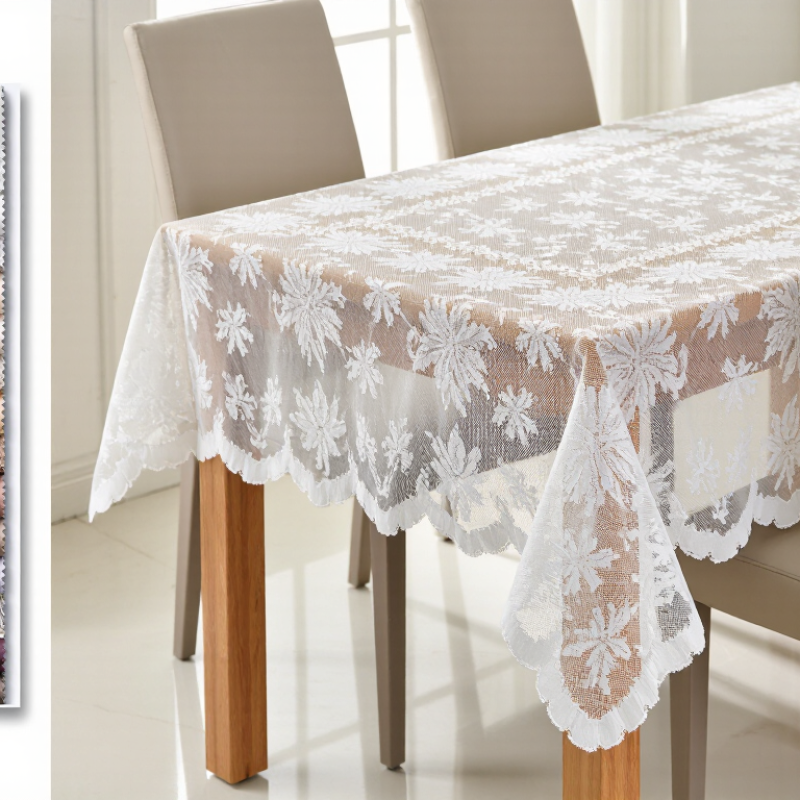
Wholesale buyers should classify lace tablecloths by fiber before comparing appearance. Cotton lace feels soft and absorbs spills, making it suitable for dining events and rustic venues. Polyester lace resists wrinkles and dries quickly, which helps rental businesses manage repeated use. Linen blends offer a crisp hand, but they may shrink or crease more than expected. Always request fiber percentages and a wash sample. Labels can be surprisingly vague.
Weave affects both strength and transparency. Tightly woven lace provides better table coverage, while open motifs create a lighter, decorative effect. Floral, geometric, and scalloped patterns appeal to different event styles. A repeated border can frame a table neatly, but uneven pattern alignment may look careless on large banquet tables. Finishes also matter. Mercerized fibers can appear smoother and brighter. Resin finishes may improve shape retention, though they sometimes reduce softness. Check the fabric under warm and cool lighting. Some whites look blue in a showroom. I have found that a 20-centimeter sample reveals more than a glossy product photograph. Test edge curling, seam stability, and colorfastness after washing. One overlooked issue is storage: dense lace can hold moisture when folded tightly. Allow ventilation. Bulk buyers should compare usable width, not only roll width, because decorative edges may reduce coverage. A small defect rate can become expensive across hundreds of pieces.
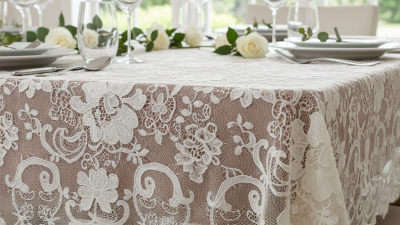
This chart compares typical moisture regain values of common textile fibers used in lace and decorative tablecloths under standard textile-testing conditions. Higher moisture regain generally indicates greater moisture absorption, while lower values are associated with faster drying and easier-care performance.
Wholesale buyers should treat lace as a performance textile, not only a decorative surface. Textile Exchange’s Materials Market Report 2024 recorded global fiber production at about 124 million tonnes in 2023. Polyester represented approximately 57% of that volume. This matters because synthetic lace blends may resist shrinkage, yet still develop pulled loops or dull edges.
ISO 13934-1 measures fabric tensile strength using a strip method. It helps buyers compare the force required to break the tablecloth in lengthwise and crosswise directions. Request separate results for the lace body, hem, and stitched border. A strong center fabric is not enough. The edge may fail first. Small details matter.
AATCC 61 evaluates colorfastness under accelerated laundering, while ISO 6330 defines domestic washing and drying procedures. Neither standard automatically creates a universal pass-or-fail limit. Buyers must set their own limits for shade change, dimensional change, seam opening, and lace distortion. Textile Exchange’s report also states that recycled polyester accounted for roughly 12% of total global fiber production in 2023, so fiber origin should be documented with test records. A test certificate can look impressive. It may still miss real kitchen conditions, including oily stains, hard water, and repeated tumble drying. I would add one practical wash trial before approving a large order. That step costs time, but skipping it can cost more.
For wholesale buyers, the ten best lace tablecloths should balance GSM, size, durability, and MOQ. Based on fabric handling and wash checks, the ranking is:
1. 220 GSM, 90 x 90 inches: dense lace, strong edges, and a premium banquet appearance.
2. 200 GSM, 70 x 108 inches: durable enough for repeated venue use.
3. 180 GSM, 90 x 132 inches: generous coverage for long rectangular tables.
4. 160 GSM, 60 x 120 inches: lighter, but easier to ship and store.
5. 150 GSM, 72 x 72 inches: practical for restaurant-sized square tables.
6. 140 GSM, 90-inch round: balanced weight and attractive drape.
7. 130 GSM, 60-inch round: affordable for seasonal event packages.
8. 120 GSM, 54 x 108 inches: suitable for lighter decorative use.
9. 110 GSM, 90 x 156 inches: long coverage, though the lace feels less substantial.
10. 100 GSM, 60 x 90 inches: low-cost, but more vulnerable to snagging.
GSM is useful, but it does not tell the whole story. Seam density, hem quality, and shrinkage after washing matter more than many buyers expect. MOQ also changes by color, size, and custom packaging. A low MOQ can reduce risk, yet the unit cost may rise sharply. My ranking is practical, not perfect; actual durability depends on handling conditions.
Tips: Request a 30 x 30 centimeter sample first. Measure it before and after washing. Check loose threads, edge curling, and transparency under bright light. Ask for production photos and a written MOQ. White lace can hide weak stitching surprisingly well.
| Rank | Lace Tablecloth Type | GSM | Common Size | Durability Profile | MOQ | Care Requirement | Best Wholesale Application |
|---|---|---|---|---|---|---|---|
| 1 | Heavy Cotton Crochet Lace | 220 | 140 × 180 cm | Very high; dense construction resists snagging and maintains shape well. | 50 pcs | Cold machine wash; reshape flat; avoid chlorine bleach. | Premium dining collections, boutiques, and hospitality settings. |
| 2 | Cotton Guipure Lace | 190 | 140 × 140 cm | Very high; bold motifs and reinforced edges provide good abrasion resistance. | 100 pcs | Gentle wash at low temperature; line dry; iron on low heat. | Formal table settings, wedding venues, and upscale home décor. |
| 3 | Scalloped Cotton Lace Overlay | 175 | 90 × 90 cm | High; substantial fabric with stable scalloped borders. | 100 pcs | Machine wash on delicate cycle; dry flat to preserve the edge. | Square dining tables, cafés, gift sets, and seasonal displays. |
| 4 | Polyester Corded Lace | 160 | 140 × 180 cm | High; synthetic fibers provide strong color and shape retention. | 200 pcs | Machine wash at 30°C; tumble dry on low; low-temperature ironing. | High-volume event rental, restaurants, and commercial décor. |
| 5 | Floral Cotton Lace Tablecloth | 145 | 150 × 250 cm | Medium-high; balanced weight suitable for regular household use. | 150 pcs | Cold wash with mild detergent; air dry; avoid aggressive wringing. | Long dining tables, farmhouse décor, and seasonal retail ranges. |
| 6 | Open-Work Linen Blend Lace | 135 | 140 × 200 cm | Medium-high; breathable blend with moderate resistance to pulling. | 100 pcs | Gentle wash; natural air dry; press while slightly damp. | Natural-style interiors, artisan stores, and summer table collections. |
| 7 | Vintage-Style Crochet Lace | 125 | 90 × 90 cm | Medium; decorative open loops require careful handling. | 50 pcs | Hand wash or delicate wash; dry flat; store folded without sharp creases. | Vintage collections, craft retailers, and accent table displays. |
| 8 | Polyester Mesh Lace Overlay | 110 | 140 × 180 cm | Medium-high; lightweight mesh dries quickly and resists shrinkage. | 300 pcs | Machine wash at 30°C; place in a laundry bag; do not bleach. | Large event programs, banquet decoration, and budget collections. |
| 9 | Fine Cotton Chantilly-Style Lace | 95 | 130 × 180 cm | Medium; fine yarns create an elegant appearance but need gentle care. | 200 pcs | Hand wash recommended; dry flat; avoid direct high heat. | Bridal décor, gift packaging, luxury accents, and photo styling. |
| 10 | Lightweight Decorative Lace Runner | 80 | 35 × 180 cm | Medium; best for decorative use with limited daily friction. | 500 pcs | Gentle hand wash; air dry; handle edges carefully when ironing. | Table runners, party décor, retail gift bundles, and hospitality accents. |
Specifications are typical wholesale purchasing benchmarks. Actual fabric weight, finished dimensions, colorfastness, and minimum order quantities should be confirmed with the supplier before placing an order.
For ten wholesale lace tablecloth options, compare landed cost, not the showroom unit price. A practical RFQ benchmark puts machine-made polyester lace at about $1.80–$4.60 per piece, depending on size, density, and finishing. Typical MOQs range from 100 to 500 pieces. Smaller orders often add $0.30–$0.80 per piece through setup charges. Confirm whether packaging, labels, and inspection fees are included.
Lead time commonly runs 25–45 days after approval. Custom patterns may require another 7–15 days. Freight can distort the result. UNCTAD’s Review of Maritime Transport 2024 notes that more than 80% of global merchandise trade by volume moves by sea, while route disruptions continue to affect transit reliability. Add ocean freight, insurance, duties, brokerage, and inland delivery before selecting a supplier. A $2.40 tablecloth can become $3.65 landed after these costs. That difference matters.
The WTO’s World Trade Statistical Review 2024 reported a 1.2% decline in global merchandise trade volume during 2023. Buyers should therefore avoid optimistic volume forecasts. My worksheet is useful, but imperfect. I sometimes underestimate port handling charges. Request three supplier quotations, one freight estimate, and a pre-production sample. Track actual arrival dates, not promised dates. A delayed seasonal shipment can cost more than a higher unit price. Evaluate fabric weight, edge stitching, shrinkage, and color consistency beside the numbers. Supplier claims need evidence.
A beautiful lace tablecloth can still fail during inspection. Wholesale buyers should request fiber composition, colorfastness, shrinkage, and seam strength results. For skin-contact textiles, OEKO-TEX Standard 100 testing can help verify harmful-substance limits. Organic claims require stronger evidence, such as transaction certificates and scope certificates.
A logo alone is not proof.
Check the certificate number, validity date, covered product, and issuing body.
Sampling should follow a written approval process. Request at least three samples from different production batches. Compare lace density, border alignment, thread tension, stains, odor, and package measurements.
Keep one approved sample in a sealed bag. The International Organization for Standardization reports that ISO/IEC 17025 supports competent laboratory testing, but laboratory results still depend on correct sampling.
I once trusted one flawless sample too quickly. That was a mistake.
One sample can hide factory variation.
Packaging deserves equal attention. The OECD Global Plastics Outlook reported that only 9% of plastic waste was recycled globally in 2019. Ask suppliers to reduce mixed materials, label carton contents clearly, and provide packaging weight data.
Paper cartons may need responsible-forestry documentation, while recycled claims require supplier evidence.
Audit the production site, not only the office.
Review worker records, needle-control procedures, inspection logs, fire exits, and subcontractor lists.
The Sedex Global Supply Chain Risk Insights report shows that supply-chain risks often remain hidden beyond direct suppliers. Recheck corrective actions with dated photos, records, and a follow-up visit.