How to Choose the Best Floral Shower Curtain?
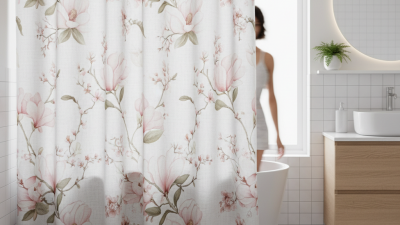
Choosing the right Floral Shower Curtain can change how a bathroom feels within minutes. It can soften hard tiles, frame a bathtub, and introduce color without expensive renovation. Yet appearance should not be the only concern. A beautiful curtain may still cling to wet skin, fade near a sunny window, or trap moisture along its bottom edge.
In this guide, we will examine fabric, size, liner compatibility, pattern scale, and everyday maintenance. Cotton can offer a warmer, more relaxed appearance, while polyester often dries faster and resists frequent washing. Vinyl may provide practical water protection, although some people dislike its texture or smell. Measure the shower area before shopping. A curtain that is too narrow leaves gaps, while excessive width can look crowded and fold awkwardly.
Think about the room’s existing colors. Small floral prints may suit compact bathrooms, while larger blossoms can create a stronger focal point. Examine stitching, reinforced holes, and weighted hems, because these details affect daily use. Reliable product information should include dimensions, materials, care instructions, and customer feedback from verified purchases. Even then, reviews can be inconsistent.
I have learned that “water-resistant” does not always mean waterproof. That distinction matters. A washable liner and regular ventilation can reduce mildew concerns, but no curtain stays fresh without care. Your best choice should balance beauty, function, cleaning habits, and budget. It may not be perfect, and that is worth admitting. The right Floral Shower Curtain is the one that works comfortably in your bathroom, not merely the one that looks impressive online.
Define Your Bathroom Style and Floral Design Preferences
How to Choose the Best Floral Shower Curtain?
Your bathroom style should guide the floral pattern, not the other way around.
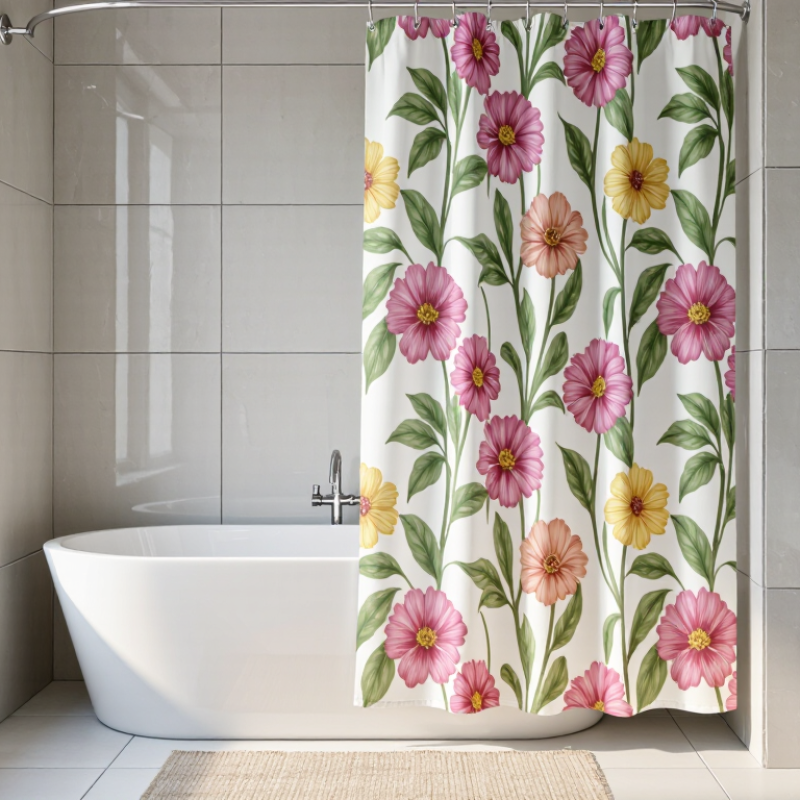
A modern bathroom suits clean stems, limited colors, and generous white space. Traditional rooms can handle denser blooms, curved vines, and warmer tones. For a small bathroom, choose flowers with a light background. Dark, oversized petals may make the room feel narrower.
Look closely at your existing surfaces. Match one curtain color with the wall, tile, or towels. Avoid copying every color. That usually creates visual noise. In my design experience, a muted sage and cream pattern feels calmer than bright flowers competing with patterned flooring. Keep it simple. The National Kitchen & Bath Association’s 2024 Design Trends Report highlights nature-inspired colors and organic references as continuing bathroom preferences. That supports floral designs, but personal comfort still matters more than a trend report.
Scale also affects daily use.
Houzz’s 2024 U.S. Bathroom Trends Study reported that 84% of renovating homeowners upgraded their showers.
This suggests the shower area remains a major visual feature. A floral curtain should frame that space without blocking it. Measure the opening before shopping, and check whether the fabric needs frequent washing. I once chose a beautiful dense print for a narrow room; it looked elegant online but felt crowded at home. That mistake is worth remembering. A design can be attractive and still be wrong for your bathroom.
Measure the Shower Area for the Proper Curtain Size
A floral shower curtain can soften a bathroom, but its appearance depends on accurate measurements. Measure the shower opening from wall to wall, not from the floor outward. Record the width at the rod, because tiled walls may narrow the space slightly. Measure from the rod to the floor, then subtract 1–2 inches. This keeps the curtain above standing water and reduces fabric drag.
Use the National Kitchen & Bath Association’s Bathroom Planning Guidelines as a practical reference. They recommend a minimum shower interior of 30 by 30 inches, with about 24 inches of entry clearance. These dimensions help confirm whether the curtain will open comfortably. For width, choose a curtain 1.5 to 2 times wider than the rod. A 60-inch opening therefore needs roughly 90–120 inches of fabric. More width creates softer folds, while less width can leave visible gaps.
Check the curtain’s finished dimensions carefully. Packaging may list fabric size, not usable coverage. I once measured the wall but forgot the curved rod, and the floral pattern sat awkwardly at one side. That mistake was avoidable. The 2024 U.S. Houzz Bathroom Trends Study, based on 1,337 renovating homeowners, shows that bathroom upgrades often focus on improving shower function and comfort. A well-fitted curtain supports both goals. Leave the hem slightly above the floor. Test the curtain with the liner installed. Small errors show quickly.
Choose Durable, Water-Resistant Curtain Materials
A floral shower curtain can brighten a bathroom, but its material determines how well it performs. Choose tightly woven polyester for a soft appearance and dependable water resistance. It dries quickly and usually holds printed flowers without becoming heavy. A denser fabric feels stronger, although density alone does not guarantee quality. Check the stitching, grommets, and bottom hem closely.
For a smaller bathroom, a coated polyester curtain can help water bead on the surface. Vinyl or PEVA options resist splashes well and wipe clean with a damp cloth. However, they may feel less breathable and can develop an odor when ventilation is poor. Water-resistant does not mean waterproof. Keep the curtain inside the tub, and let it spread fully after each shower.
I test curtains by examining the hem after repeated washing. Loose threads often appear there first. A weighted hem can reduce drifting, especially near a strong fan or open window. Follow the care label, because hot washing may damage coatings or shrink fabric. I once chose a beautiful curtain with weak eyelets; it looked fine for weeks, then several rings pulled free. That mistake changed my priorities. Attractive patterns matter, but reinforced seams and washable materials deserve more attention. Examine the bathroom’s airflow, splash range, and cleaning habits before choosing the final fabric.
How to Choose the Best Floral Shower Curtain? - Choose Durable, Water-Resistant Curtain Materials
Selection tip: For a durable floral shower curtain, tightly woven polyester usually offers the best balance of water resistance, easy care, appearance, and service life. Natural fabrics generally perform better as decorative outer curtains when combined with a waterproof liner.
Compare Floral Colors, Patterns, and Visual Balance
Choosing the best floral shower curtain starts with color, not flowers.
A 2024 U.S. Houzz Bathroom Trends Study reports that 84% of renovating homeowners upgraded their showers. This makes the curtain a visible design decision, even in a small bathroom.
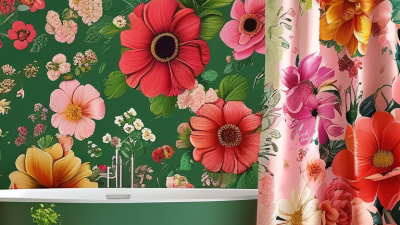
Compare the curtain with existing tile, wall paint, towels, and metal fixtures. Soft sage, cream, and dusty blue can reduce visual pressure in compact rooms. Strong burgundy or cobalt flowers create focus, but they may make narrow spaces feel busier.
The 2024 Global Home Decor Market Report by Grand View Research valued the market at approximately $682.7 billion in 2023, reflecting continued interest in decorative textiles and coordinated interiors.
Look closely at pattern scale. Large blooms suit open walls and simple accessories. Small scattered flowers work better beside patterned floor tile. Leave visual breathing room.
A useful test is to photograph the bathroom from the doorway, then reduce the image to grayscale. If the flowers disappear completely, the contrast may be too weak. If the curtain dominates, the pattern probably needs calmer colors or more empty background.
I have made this mistake.
A pale floral design can look elegant online, yet appear dull under warm bathroom lighting. Check a fabric sample near the shower at morning and evening. Also inspect the repeat length; awkwardly cut blossoms can make an otherwise refined curtain feel accidental. Personal taste still matters, and design reports cannot measure every household’s comfort.
Check Maintenance Needs, Hardware Fit, and Overall Value
A floral shower curtain should survive daily moisture, not only look attractive in a product photo. Check the fabric label for machine-washable materials, colorfastness, and mildew-resistant treatment. Polyester usually dries faster than heavy cotton, while cotton may need more frequent washing.
The U.S. Environmental Protection Agency reports that showers account for nearly 17% of household indoor water use. That moisture reaches the curtain every day.
Ventilation matters too. A working exhaust fan and a curtain that fully opens can reduce lingering dampness.
Measure before choosing a pattern.
Record the rod length, curtain height, and distance between mounting holes. A standard curtain may still pool on the floor or leave gaps beside the tub. Count the grommets, then compare them with your rings or hooks.
Metal hardware can look durable, but rust-prone parts may stain pale floral fabric. Plastic hooks are less elegant. They are often easier to replace.
The 2024 U.S. Houzz Bathroom Trends Study identifies shower-area upgrades as a major remodeling priority. That suggests appearance matters, but value depends on service life. Choose reinforced seams and weighted hems when prices are close.
I once selected a delicate botanical print with thin stitching. It faded quickly and twisted after washing. My mistake was judging the artwork before checking construction.
A cheaper curtain is not a bargain if it needs replacement twice a year. Compare cleaning time, hardware compatibility, and expected durability before trusting the lowest price.