Leave Your Message

2026 How to Measure for an Oval Tablecloth?

Choosing the right Oval Tablecloth begins with accurate measurements, not guesswork. An oval table can look simple, yet its curved ends make sizing less forgiving. A cloth that is too short exposes the table edge. One that is too long may bunch near the chairs.

Textile consultant Karen H. Lewis advises, “Measure the tabletop first, then choose the drop that suits daily use.” This practical rule keeps the process clear. However, her advice should be checked against your table’s design and your household needs. A formal dining room may need a deeper drop. A busy family table usually benefits from a shorter, easier-to-manage edge.

In this guide, you will measure the tabletop’s longest length and widest width. Keep the measuring tape flat and record both numbers in inches or centimeters. Then decide how far the fabric should hang on each side. Add twice that drop to both measurements. For example, a table measuring 72 by 44 inches with a 10-inch drop needs an Oval Tablecloth measuring about 92 by 64 inches.

Do not ignore table leaves.

Measure the table when fully extended. Check whether the ends remain rounded or become wider and flatter. Also allow room for hems, fabric shrinkage, and slight measuring errors. Perfect results are uncommon on the first attempt. That is acceptable. Careful checking usually matters more than complicated formulas.
2026 How to Measure for an Oval Tablecloth?

Measure the Oval Table at Its Longest and Widest Points

2026 How to Measure for an Oval Tablecloth?

Measure the Oval Table at Its Longest and Widest Points

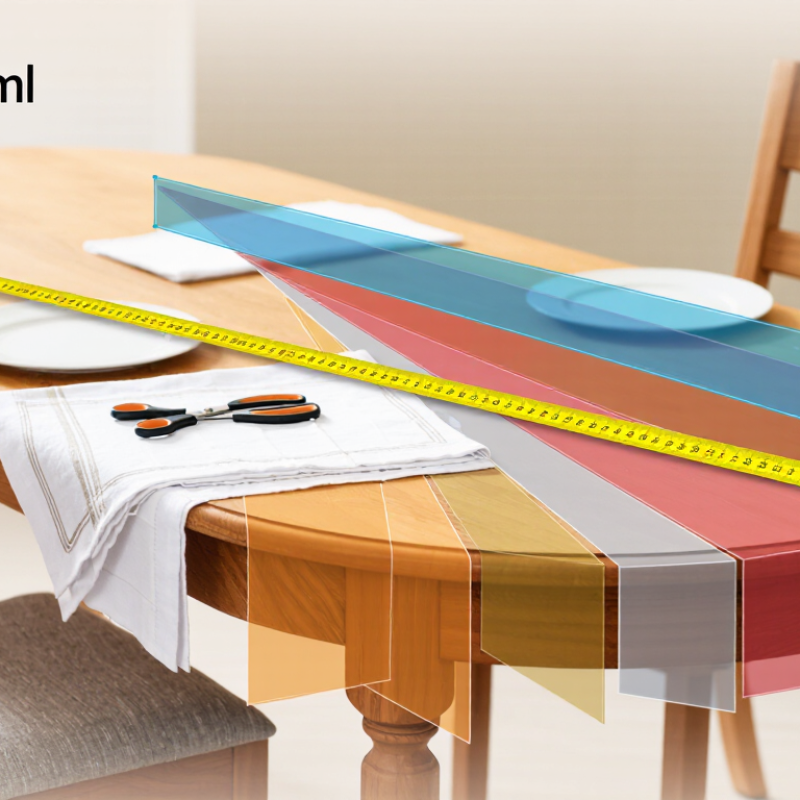
Measure the tabletop itself, not an old tablecloth. Use a flexible tape measure for better accuracy. Measure from one rounded end to the opposite end at the longest point. This is the table’s length. Then measure across the widest middle section, keeping the tape perpendicular to the length. This is the width. Keep the tape flat against the surface. Do not follow the curved edge.

Add the desired drop twice to both measurements. For example, a 60-inch-long table with a 10-inch drop needs a cloth length of about 80 inches. A 40-inch-wide table needs a cloth width of about 60 inches. A drop between 8 and 12 inches often looks balanced for everyday dining, but chair height and table design can change the result. I once measured only the central section and ignored a slightly extended end. The cloth looked almost right, but not quite. That small mistake was useful.

Tips: Measure twice. Record inches clearly. Check both ends for symmetry. If the tabletop has thick trim or an unusual curve, measure those areas separately. Avoid rounding too early. A half-inch can affect the drape, especially on a smaller oval table. Lay paper or fabric over one corner to test the intended drop before ordering or cutting. The final fit should leave enough space for comfortable seating without hiding the table’s shape.
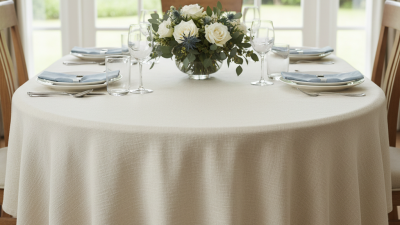
Choose a 6–12 Inch Drop for Standard Everyday Dining

For an oval tablecloth, measure the tabletop from end to end at its longest point. Then measure across the widest center section. Keep the tape flat, not raised over the curved edge. For standard everyday dining, choose a 6–12 inch drop on each side. A 6-inch drop looks neat and practical for chairs. A 10–12 inch drop feels softer and more traditional. Add twice the chosen drop to both tabletop measurements. For example, a 60-by-40-inch table needs a 72-by-52-inch cloth for a 6-inch drop.

Tips: Check chair clearance before ordering or cutting fabric. A longer drop may brush laps or catch on chair arms. Measure twice. If the table has leaves, measure it in its usual daily setting. I once measured only the narrow center, and the cloth pulled awkwardly across both ends. That small mistake changed the drape more than expected. For washable fabric, allow slight shrinkage and follow its care instructions.

Use a 6-inch drop when the table is used often, especially in a busy kitchen or dining area. Choose 8–12 inches for a more relaxed appearance during regular meals. The edge should hang evenly around the curved ends. Stand back and check the hem from seated eye level. Oval tables can look balanced on paper but uneven in a real room. Recheck after laundering if the fit needs to stay precise.

Add Twice the Drop to the Table’s Length for Cloth Length

2026 How to Measure for an Oval Tablecloth?

Measure the tabletop’s longest length and widest width. Do not measure around the curved edge. Then choose the drop, meaning the distance from the tabletop edge to the cloth’s lower edge. Add twice the drop to the table’s length for cloth length. Use the same formula for width: table width plus twice the drop.

For example, a 72-by-42-inch oval table needs a 96-by-66-inch cloth for a 12-inch drop.

This calculation keeps both ends balanced.

The drop should match the room’s function. A 10-to-12-inch drop gives a neat everyday appearance. A 15-inch drop looks more formal but may brush seated legs. For a floor-length setting, measure from the tabletop to the floor, then add that distance twice.

Textile Exchange’s 2024 Materials Market Report recorded 124 million tonnes of global fiber production in 2023. Accurate measuring can help prevent unnecessary fabric waste, although household impact varies. ASTM textile terminology also supports consistent measurement language.

I once measured only the tabletop length. That shortcut failed.

Tips:

Measure twice, especially around rounded ends. Keep the tape level across the widest point. Check the finished cloth dimensions, not only the advertised table size. Allow extra length for shrinkage when the care label permits it. A two-inch error can make one end look noticeably shorter. When the table has thick leaves or an uneven edge, measure after extending it fully.

Add Twice the Drop to the Table’s Width for Cloth Width

For an oval tablecloth, measure the tabletop’s widest point across the center. This is the table’s width, not its length. Add twice the desired drop to that measurement. A 42-inch-wide oval table with a 10-inch drop needs a cloth width of 62 inches.

cloth width = table width + twice the drop

72-inch table length + 10-inch drop = 92 inches

The formula is simple: cloth width = table width + twice the drop. The same rule applies to length. For a 72-inch table length, the required cloth length is 92 inches with a 10-inch drop. A 12-inch drop changes both measurements noticeably, so small errors become visible near the corners.

Measure twice. Oval edges are easy to misread.

Professional textile guidance also supports checking fabric behavior before cutting. ISO 3759 provides methods for measuring dimensional change after washing, while ASTM D3774 addresses fabric-width measurement.

Textile Exchange’s 2024 Materials Market Report recorded global fiber production at 124 million tonnes in 2023, showing why accurate cutting matters for reducing avoidable waste.

I sometimes overestimate the finished width by ignoring selvage edges. That mistake is easy to make, especially with narrow fabric.

Consider a 2–5% shrinkage allowance when the fiber content and care label suggest it.

However, that percentage is not universal.

Test a small fabric sample first.

Prewash washable fabric, then measure its usable width.

Allow for 1–2 Inches of Fabric Shrinkage Before Final Sizing

2026 How to Measure for an Oval Tablecloth?

Allow for 1–2 Inches of Fabric Shrinkage Before Final Sizing

Measure the tabletop’s longest length and widest width. For an oval table, keep the tape centered across both axes. Add twice the desired drop to each measurement. A 10-inch drop needs 20 extra inches in length and width.

Do not cut immediately. Cotton and linen can change after laundering. AATCC TM135 provides a recognized method for measuring dimensional change after home washing. Textile Exchange’s 2024 Materials Market Report places cotton at roughly one-fifth of global fiber production, making fiber content important when estimating shrinkage. Many prewashed fabrics remain fairly stable, but untreated natural fabric may lose about 1–2 inches across a tablecloth-sized panel. That figure is practical, not guaranteed. We should measure the actual fabric.

Tips: Wash and dry a fabric sample first. Measure it before and after laundering. If a 60-inch test panel becomes 58.5 inches, expect approximately 2.5% shrinkage. Add 1–2 inches to the planned finished dimensions, then recalculate the drop. Check the grain direction, too. Oval edges reveal uneven shrinkage quickly.

For example, a 60-by-40-inch tabletop with a 10-inch drop needs an 80-by-60-inch finished cloth.

If shrinkage may reach 2%, cut closer to 81.6 by 61.2 inches. I would not round too early. A small mistake can expose the table edge. A sample test remains the more reliable choice.