Buying a Dining Room Tablecloth for international markets requires more than choosing an attractive pattern. Buyers must balance fabric performance, dimensions, care instructions, packaging, and regional preferences. A cloth that looks elegant in a showroom may shrink after washing or slide across a polished table.
The market is changing. Textile Exchange’s Materials Market Report 2024 estimated global fiber production at about 124 million tonnes in 2023. It also projected continued growth toward 2030. This highlights the importance of material selection and traceability. Grand View Research has reported steady expansion in the global home textiles market, supported by rising household spending and online retail. However, market figures differ between research firms. Treat them as useful direction, not absolute truth.
These seven buying tips focus on practical decisions. They cover cotton, linen, polyester blends, stain resistance, table measurements, color consistency, and supplier verification. A restaurant buyer may prioritize repeated washing. A residential customer may prefer soft texture and seasonal design. Neither choice is automatically better.
Look for credible testing and clear documentation. OEKO-TEX certification can help assess harmful-substance controls, while GOTS applies strict requirements to certified organic textiles. ISO 6330 washing procedures can support more consistent shrinkage comparisons. Ask suppliers for test reports, fabric composition, sample approvals, and production photos. Small details matter. Check the hem closely. Inspect the corners. Measure before ordering.
Some buyers still rely on photographs alone. That is risky. Lighting changes color, and screen measurements mislead. A careful review of these points can reduce returns, improve customer trust, and support more responsible global purchasing. Perfect decisions are rare. Better questions usually produce better tablecloths.
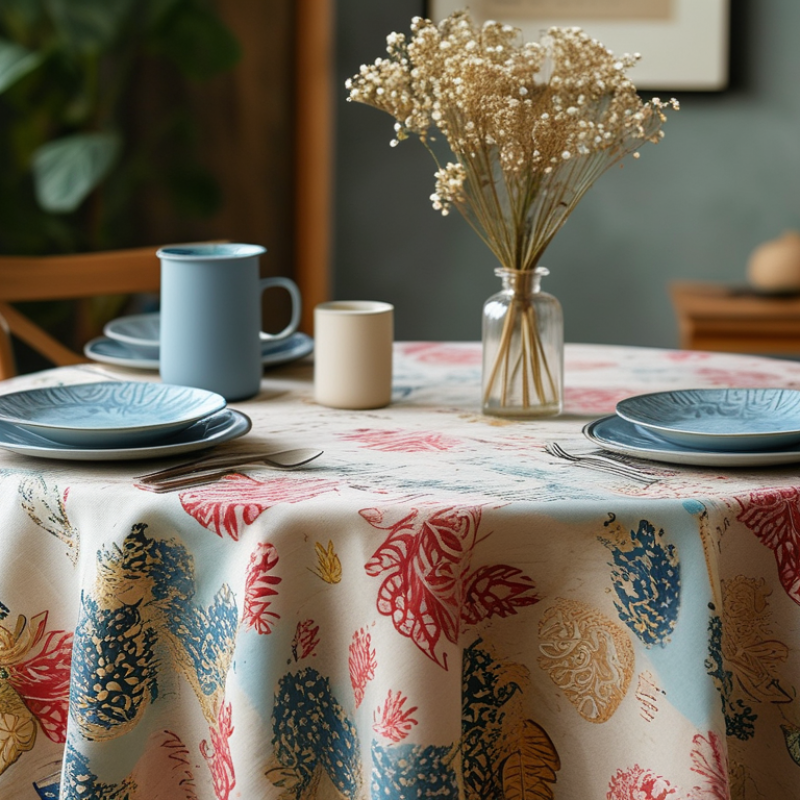
Before choosing a tablecloth, define how your dining table is used. Daily family meals require washable fabric and practical proportions. Formal dining may justify linen, textured cotton, or a longer drop. Outdoor settings need stronger color resistance and faster drying. Grand View Research’s 2024 Home Textiles Market Report valued the global market at approximately USD 129.8 billion in 2023. This growth reflects stronger interest in decorative, functional household textiles. However, appearance should not replace accurate measuring.
Measure the tabletop length and width, then include every extension leaf. Add twice the preferred drop to both measurements. A 180 × 90 cm table with a 25 cm drop needs a 230 × 140 cm cloth. For everyday dining, a 15–25 cm drop usually reduces lap interference. Formal settings may use 30–40 cm. My own fitting checks often reveal a simple mistake: buyers measure only the closed table. That choice fails when guests arrive. Leave room for shrinkage, especially with untreated natural fibers. Washing instructions matter more than product photography.
Tips: Record measurements in centimeters and inches. Check the table’s maximum length. Consider chair clearance. Test a small fabric sample first. A slightly shorter cloth can be more useful than a dramatic overhang. The 2023 Textile Exchange Materials Market Report also notes rising scrutiny of fiber sourcing and durability. That encourages buyers to ask about composition, care, and expected service life. Still, no fabric choice is perfect. A stain-resistant finish may reduce softness, while pure linen may crease quickly.
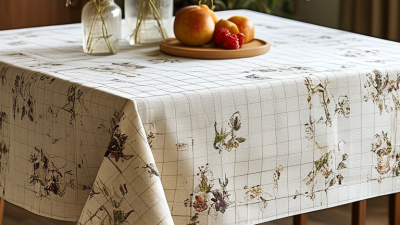
For global buyers, a dining room tablecloth should match the table’s use, climate, and care conditions. Cotton feels soft and absorbs spills, but it may shrink after washing. Linen offers a cool, textured surface and strong breathability. However, its natural wrinkles can look untidy in formal settings. Polyester resists stains, dries quickly, and keeps its shape, although it can feel less luxurious. Blended fabrics often balance comfort, durability, and price.
Weave affects performance as much as fiber content. Plain weave is stable and usually easier to inspect for defects. Twill weave creates a diagonal texture and often handles daily friction better. Jacquard designs add visual depth, but raised patterns may trap crumbs during cleaning.
For busy restaurants, a dense weave and finished edges can reduce fraying. Check fabric weight, thread density, colorfastness, and washing temperature before placing a large order.
I once underestimated shrinkage in a cotton sample. The first wash changed the fit noticeably. That mistake made pre-shipment testing essential. Request samples from the same production batch, then test washing, rubbing, moisture absorption, and seam strength. Buyers in humid regions should examine drying time and mildew resistance carefully. Buyers serving outdoor meals may prefer synthetic fibers with light water resistance. Still, performance claims need test records, not attractive wording. A practical specification sheet should state dimensions, tolerances, fabric composition, care instructions, and inspection standards. Some suppliers provide incomplete data. Ask again.
Measure the tabletop before choosing fabric, not after. Record length, width, and height in centimeters and inches. For a rectangular table, add twice the desired drop to both tabletop dimensions. A 180-by-90-centimeter table with a 25-centimeter drop needs a cloth near 230 by 140 centimeters. Allow a small tolerance for washing and manufacturing.
In my buying experience, this detail prevents many avoidable returns. It is easy to measure only the tabletop. That mistake is costly.
Match the cloth shape to the furniture. Rectangular cloths suit long tables, while square cloths work best on square surfaces. Round tables need diameter-based sizing, not width and length. A 140-centimeter round table with a 25-centimeter drop needs approximately 190 centimeters across.
Check whether chairs touch the hanging fabric. A drop that reaches the seats looks elegant but may catch during dining. Longer drops create a formal setting, though they are harder to keep clean.
Edge finishing affects durability and appearance. Double-turned hems usually resist fraying better than a single narrow fold. Mitered corners create cleaner lines on rectangular cloths. For frequent washing, inspect seam density and thread security. Ask for a sewn sample when ordering internationally.
Photos can hide uneven hems. I once approved a beautiful sample too quickly, then noticed weak corners after laundering. That oversight still influences my inspection checklist.
Slight irregularities may happen in natural fabrics, but repeated loose threads signal poor quality.
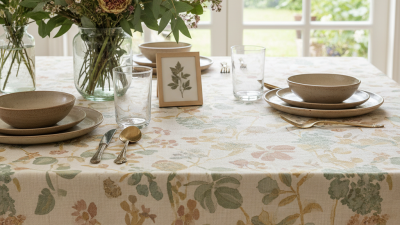
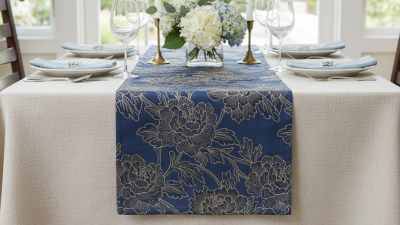
For global buyers, color and pattern should match both the room and local dining habits. Warm beige, soft gray, and muted blue usually adapt well to different interiors. Bright colors may look attractive online, but they can feel overwhelming under strong daylight. Always request a fabric swatch when possible. Screens often distort red and green tones. Small geometric patterns hide crumbs better than large floral prints. However, patterns may look uneven on extended tables. Measure the table before choosing a design.
Tips: Compare the cloth beside your plates, chairs, and wall color. Check whether the pattern repeats smoothly across the full width. I once underestimated daylight, and a soft cream appeared nearly white indoors. That mistake changed the room’s balance.
Care requirements affect long-term value. Check the washing temperature, drying method, ironing needs, and stain resistance. Cotton and linen often provide a natural appearance, but they may shrink or wrinkle. Blended fabrics can reduce maintenance, though their texture may feel less breathable. Look for reinforced hems and closely woven surfaces. Gently pull the fabric near a corner. Loose threads may signal weak construction. For frequent hospitality use, test a sample through several washes before placing a large order. Keep extra length for shrinkage, but do not assume every supplier measures it consistently. Ask for exact finished dimensions. Durability should support real use, not just product photographs.
Suggested evaluation weights for comparing tablecloth options across colors, patterns, care requirements, and durability. The percentages form a practical 100-point buying framework, not company or brand market-share data.
How to use it: Check colorfastness and pattern versatility for different dining settings, confirm washing and drying instructions for the destination market, and prioritize fabric construction, stain resistance, and seam quality when long-term durability matters most.
When buying dining room tablecloths globally, supplier standards deserve more than a polished product photo. Ask for a written quality checklist covering fabric weight, weave density, colorfastness, shrinkage, stitching, and stain resistance. Request recent test reports, not generic certificates copied into a sales folder. Certifications should match the material and destination market. Verify issuing bodies, certificate numbers, testing dates, and product scope. A sample is essential. Rub it repeatedly, wash it, and measure it afterward. Small changes can expose large production risks.
Pricing should be compared line by line. Separate fabric, hemming, packaging, inspection, tooling, and inland transport charges. A low unit price may hide thin fabric or costly minimum order quantities. Ask whether quotes use EXW, FOB, CIF, or DDP terms, and confirm the named port or delivery address. Currency, payment schedule, validity period, and adjustment rules should be written clearly. I once treated an attractive quote as complete, then discovered packaging was excluded. That mistake was avoidable.
Shipping terms need practical detail. Confirm production lead time, booking responsibility, carton dimensions, gross weight, pallet rules, and supplied documents. For mixed-size orders, request a carton packing list before shipment. It helps estimate storage space and import handling. Check who manages cargo insurance and what happens after delays or damaged cartons. Also ask for an inspection window before final payment. Supplier claims are useful, but independent checks are stronger. I still allow extra time for customs, because optimistic schedules often fail.
| Buying Tip | What to Check | Practical Supplier Standard | Relevant Certification or Rule | Pricing Consideration | Shipping and Order Term |
|---|---|---|---|---|---|
| 1. Confirm the Fabric Composition | Request the fiber percentage, fabric weight, weave or knit structure, finishing process, and care instructions. | The composition and declared tolerances should match the approved sample and commercial invoice. | Textile labeling requirements vary by destination. The fiber content should be supported by test documentation where required. | Linen, organic fibers, heavier fabrics, special coatings, and complex jacquard patterns generally increase material cost. | Confirm folded dimensions, carton dimensions, gross weight, and net weight before requesting freight quotations. |
| 2. Set Clear Size and Measurement Tolerances | Specify finished length, finished width, drop length, hemming method, corner shape, and measurement points. | Use a signed specification sheet and pre-production sample. A commonly negotiated finished-size tolerance is approximately ±1–2 cm, subject to fabric and contract terms. | Dimensional testing may include laundering or washing shrinkage according to an agreed test method. | Non-standard sizes and small production runs usually have higher cutting, setup, and material waste costs. | Pack each size separately and mark carton quantities clearly to reduce receiving and customs delays. |
| 3. Audit Supplier Quality-Control Procedures | Check incoming-fabric inspection, color approval, needle and stitching control, final inspection, defect records, and corrective-action procedures. | Require documented inspection criteria, an approved reference sample, batch traceability, and a final inspection report before shipment. | ISO 9001 is a quality-management-system standard; it does not certify that every individual product is defect-free. | Inspection, laboratory testing, and third-party audits may be quoted separately from the unit price. | Agree on who pays for inspection, the inspection date, acceptable defects, and the remedy for non-conforming goods. |
| 4. Verify Safety and Sustainability Claims | Ask for certificate scope, certificate number, validity period, certified facility, product coverage, and test reports. | Do not accept “eco-friendly” or “non-toxic” claims without documentation that applies to the specific product and production site. | OEKO-TEX STANDARD 100 addresses harmful substances in tested textile products. GOTS applies to qualifying organic fibers and includes environmental and social criteria throughout the supply chain. | Certified materials and chain-of-custody documentation can add testing, audit, licensing, and material costs. | Check destination-market chemical rules, including applicable REACH requirements in the European Union and consumer-product rules in the United States. |
| 5. Compare Quotations on the Same Basis | Compare fabric composition, dimensions, weight, color count, print method, packaging, order quantity, tooling, testing, and payment terms. | Request a line-item quotation showing product price, packaging, sampling, testing, inland transport, and any setup charges. | The quotation should identify whether compliance testing is included, excluded, or performed by an independent laboratory. | The lowest unit price may not be the lowest landed cost. Include freight, duties, taxes, inspection, payment fees, and possible rework. | Use the same Incoterm, currency, quantity, and destination when comparing offers. Incoterms define delivery responsibilities but do not determine import duties or product compliance. |
| 6. Choose the Appropriate Incoterm | Confirm the named place, transfer of risk, export clearance, freight responsibility, insurance, import clearance, duties, and taxes. | Use the current ICC Incoterms rules and write the exact named place, such as a port, terminal, warehouse, or delivery address. | EXW places most transport responsibility on the buyer. FOB applies to sea or inland-waterway shipment. CIF includes cost, insurance, and freight to the named port. DDP places extensive delivery and import responsibilities on the seller. | A higher quoted price may include inland delivery, export handling, insurance, or destination services rather than a higher product cost. | For containerized cargo, confirm whether the selected term is suitable for the shipment structure and whether local customs rules permit the parties to perform the stated obligations. |
| 7. Plan Lead Time, Packaging, and Documents | Confirm sample lead time, production lead time, booking time, transit time, customs clearance, holiday shutdowns, and buffer stock. | Obtain a production schedule with approval milestones and require shipment documents to match the purchase order. | Typical commercial documents may include a commercial invoice, packing list, transport document, certificate of origin where applicable, and required test or conformity documents. | Rush production, split shipments, custom labels, individual polybags, and special export cartons can increase total cost. | Choose air freight for speed and ocean freight for larger, less time-sensitive shipments. Confirm carton markings, pallet requirements, moisture protection, and document deadlines. |
Note: Certification requirements, labeling rules, import duties, and test methods depend on the destination market and product specifications. Verify current requirements with the relevant authorities and an experienced customs or compliance professional.