Leave Your Message
China has become a significant sourcing base for Wipeable Tablecloth products, supported by mature textile manufacturing, coating technology, and export logistics. Global buyers now compare more than price. They examine surface durability, stain resistance, odor, packaging, and supplier consistency.
Grand View Research valued the global home textiles market at approximately USD 129.7 billion in 2022. It also projects steady growth through 2030. Textile Exchange reported that global fiber production reached about 124 million tonnes in 2023. These figures suggest expanding demand, but they also expose a concern: not every “easy-care” tablecloth offers the same service life. The wipeable category lacks one universally accepted market definition. Buyers must inspect evidence carefully.
Kate Fletcher, a respected textile sustainability expert, once said, “Sustainability is not about doing less harm. It’s about doing more good.” Her words matter here. A durable Wipeable Tablecloth can reduce frequent laundering, replacement, and water consumption, but only when its coating remains reliable after repeated cleaning. That point is often overlooked.
This guide examines leading Chinese suppliers for global buyers. It considers fabric construction, PVC and coated polyester options, printing quality, sample control, minimum order quantities, and export experience. Factory photos are useful. Independent testing is better. Supplier claims still require verification.
Some buyers may focus too heavily on the lowest quotation. That can become an expensive mistake. A stronger evaluation combines product testing, transparent communication, and realistic expectations about lifespan.
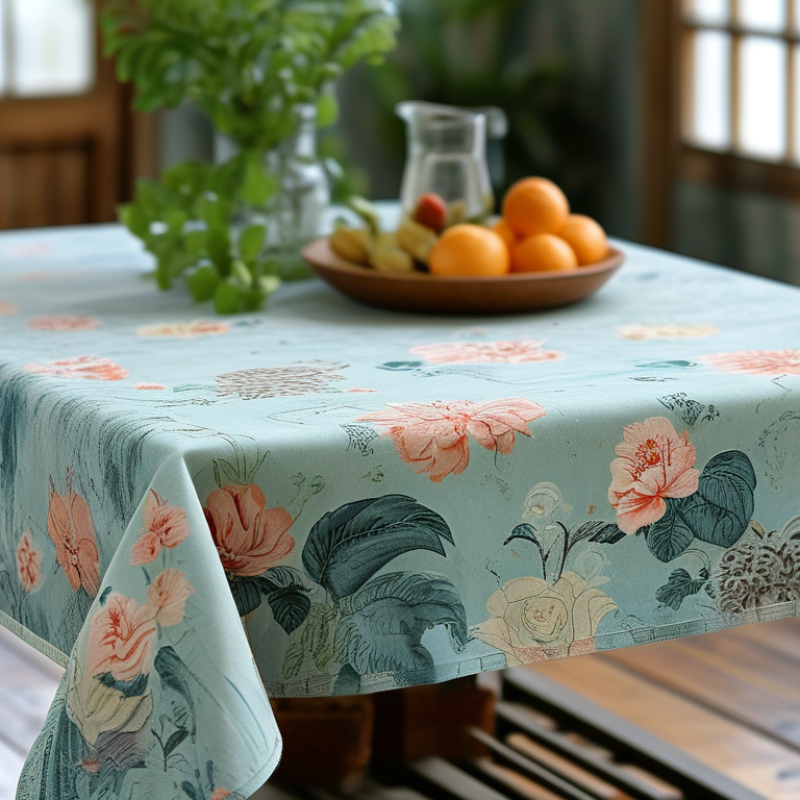
Wipeable tablecloths are commonly made from PVC-coated polyester, PEVA, TPU, or laminated cotton. PVC offers a firm surface and strong resistance to spills, oils, and daily abrasion. PEVA feels softer and suits lighter household use. TPU provides flexibility, but it requires careful cost and performance checks. Laminated cotton gives a textile appearance. Its coating can still scratch if handled roughly.
For global buyers, material choice should follow the use environment. A restaurant may need a dense coating, reinforced edges, and stable color after repeated cleaning. Outdoor tables need water resistance, UV performance, and secure sizing. Home users often value a soft hand feel and quiet backing. Not every “waterproof” claim means the same thing. Not always. Ask for test data on stain removal, seam strength, colorfastness, and heat tolerance. Check whether the surface safely accepts warm dishes. Many products cannot tolerate direct hot cookware.
These tablecloths serve dining rooms, cafés, hotels, event venues, classrooms, and picnic areas. Healthcare and care facilities may also use them, subject to local hygiene requirements. During supplier evaluation in China, buyers should inspect coating uniformity, odor, roll tension, packaging, and cutting accuracy. Small details matter. Sample testing matters more than attractive photos. A cloth can look excellent and still curl after washing. That weakness deserves attention. Specifications should state dimensions, material thickness, cleaning method, and acceptable defect limits. Reliable suppliers explain limitations instead of promising perfection.
| Material | Typical Construction | Key Features | Wipeability and Care | Water Resistance | Heat Guidance | Main Applications |
|---|---|---|---|---|---|---|
| PVC Tablecloth | Flexible polyvinyl chloride film, commonly produced as a single layer or bonded to a textile backing. | Fully waterproof Durable Low cost Many prints | Food and liquid spills can usually be removed with a damp cloth and mild detergent. Avoid abrasive cleaners. | High; the continuous PVC surface provides a strong liquid barrier. | Use trivets for hot cookware. Direct contact with very hot items may soften, mark, or deform the surface. | Family dining, outdoor dining, cafés, restaurants, children’s tables, and everyday kitchen use. |
| PEVA Tablecloth | Polyethylene vinyl acetate film, generally used as a chlorine-free alternative to conventional PVC film. | Chlorine-free Lightweight Water-resistant Soft hand feel | Wipe clean with water and mild soap. Frequent folding may create creases, especially in thinner constructions. | High when the surface is intact and seams or edges are properly finished. | Not intended for direct contact with hot pots, pans, or heated servingware. | Picnic tables, casual dining, seasonal décor, children’s areas, and temporary event settings. |
| Coated Polyester | Woven polyester fabric finished with an acrylic, polyurethane, or PVC-based coating on one side. | Textile appearance Shape retention Print clarity Moderate durability | Most surface spills can be wiped away. Some products allow gentle machine washing; care instructions vary by coating. | Moderate to high, depending on coating coverage, seam construction, and fabric weight. | Use a heat-resistant pad. High heat can damage the coating or cause surface transfer. | Indoor dining, hospitality, banquet service, catering, rental décor, and coordinated table settings. |
| Laminated Cotton | Printed or woven cotton fabric laminated with a transparent protective film, often polyurethane or PVC. | Natural fabric look Decorative Flexible Easy to fold | Wipe the laminated face promptly after spills. Machine washing and ironing may reduce the life of the laminate. | High on the laminated face; stitched edges and seams may allow moisture penetration. | Place hot dishes on trivets. Direct heat can cause bubbling, discoloration, or film damage. | Home dining, kitchen tables, craft areas, cafés, gift-oriented textile collections, and seasonal décor. |
| Oilcloth | Usually a woven fabric, commonly cotton or polyester, covered with a smooth waterproof PVC coating. | Glossy finish Strong spill protection Pattern-rich Easy handling | Wipe with a soft damp cloth and mild detergent. Do not use bleach, tumble drying, or abrasive scrubbing. | High on the coated surface; cut edges should be kept away from prolonged soaking. | Use a trivet beneath hot dishes because the coating is sensitive to high temperatures. | Kitchen tables, cafés, market stalls, outdoor dining, family use, and decorative home collections. |
| TPU-Coated Fabric | Woven polyester or cotton fabric coated with thermoplastic polyurethane, usually as a thin protective layer. | Soft and flexible Abrasion resistance Low odor Premium feel | Wipe clean with a damp cloth and mild soap. Avoid solvents and rough cleaning tools that may scratch the coating. | High when the coating is continuous; performance depends on fabric construction and seam finishing. | Use heat protection for hot cookware. Prolonged high heat may affect the polyurethane coating. | Premium home dining, hospitality, outdoor-living products, children’s products, and reusable table coverings. |
| Polyester with Acrylic Coating | Woven polyester fabric treated with an acrylic finish that improves resistance to water and surface staining. | Fabric texture Color stability Lightweight Foldable | Surface dirt and fresh spills are generally removable by wiping. Stubborn stains may require gentle spot cleaning. | Moderate; acrylic finishes often provide water repellency rather than a completely waterproof barrier. | Use a protective pad under hot items. Follow the product’s specific ironing and washing instructions. | Indoor dining, outdoor entertaining, event décor, hotel tables, and lightweight reusable covers. |
| Silicone-Coated Fabric | Woven textile treated with a silicone surface coating, used where flexibility and water repellency are required. | Flexible Water-repellent Smooth surface Reusable | Wipe with a soft cloth and mild detergent. Avoid sharp objects and harsh chemicals that can damage the finish. | Moderate to high, depending on coating weight and whether seams are sealed. | Heat performance varies by construction; use a trivet unless the supplier specifies heat resistance. | Outdoor dining, camping, travel use, modern home décor, and specialty reusable table coverings. |
Performance depends on fabric weight, coating thickness, seam construction, printing process, and finishing quality. Buyers should confirm care instructions, safety documentation, dimensions, and test results with the supplier before bulk production.