Choosing the right shower curtain can make a small bathroom feel cleaner and easier to manage. This 2026 buyer’s introduction focuses on the Shower Curtain Pvc options available for everyday homes, from clear liners that let light pass through to thicker curtains that offer more privacy. The best choice depends on your shower size, ventilation, cleaning habits, and budget—not just the product photo.
Details matter. Check the listed width and length against your tub before ordering, and look for reinforced holes, rust-resistant hooks, and a weighted hem that helps limit billowing. A smooth surface may be easier to wipe, but no curtain stays fresh without regular care. Open windows or run an exhaust fan after showers when possible. Small habits help.
Material quality and product claims can vary between sellers. A strong odor after unpacking, unclear care instructions, or vague material descriptions deserve a closer look. They are not automatic proof of poor quality, but they should prompt questions. This guide will compare useful features, common trade-offs, and points worth checking before purchase. It will not treat one curtain as perfect for every bathroom. PVC can be practical, yet some buyers may prefer another material or a simpler liner. Consider your needs first. Then compare carefully.
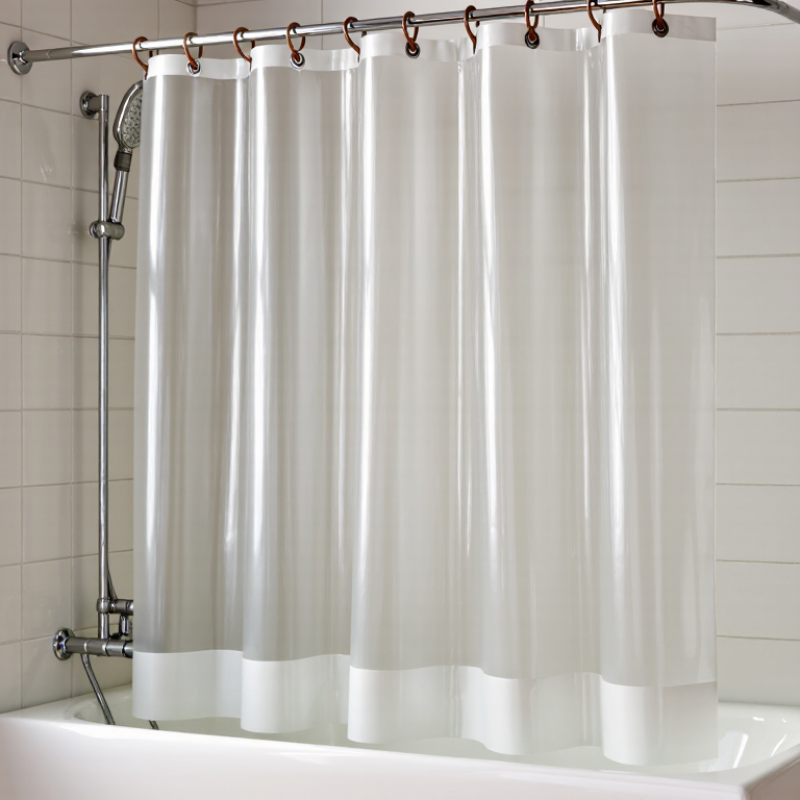
A PVC shower curtain is a flexible sheet made from polyvinyl chloride, often with plasticizers that help it bend instead of crack. For buyers, “PVC” alone says little about feel or service life. Check the product’s stated thickness, usually given in mils or millimeters, and compare like units. A thicker sheet may feel heavier and hang more steadily, but thickness alone does not prove better tear resistance. Small details matter: hold the curtain toward a light and look for uneven areas, cloudy patches, or weak-looking seams.
ASTM D882 is the standard test method for tensile properties of thin plastic sheeting. A lab stretches a prepared strip and records properties such as tensile strength and elongation at break. Those results can help compare materials, but they are not a universal pass-or-fail grade for shower curtains. Ask whether the reported values apply to the finished curtain or only to a raw film sample. That distinction is easy to miss.
The broader PVC market provides context, not a direct curtain-quality ranking. Grand View Research estimated the global PVC market at USD 72.3 billion in 2023 and projected a 3.5% compound annual growth rate from 2024 to 2030. The figure covers many PVC applications, not shower curtains specifically. Use it as market background, not proof of product performance. A test report with thickness, specimen details, and D882 results is more useful. Even then, one number can mislead.
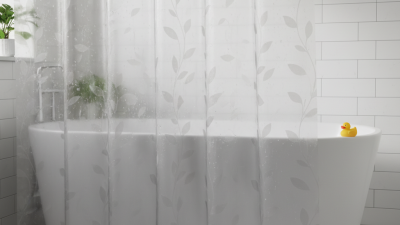
A 72-by-72-inch PVC curtain is common for standard bathtub alcoves, but it will not fit every opening. Measure the rod span, not just the tub. For many tubs, this width gives useful coverage when the rod opening is close to 72 inches. Extra width creates folds; a stretched panel may leave gaps beside the faucet or wall. Measure the drop from the rod to the tub rim. A hem that touches standing water may cling, while one set too high can let splashes escape. Measurements can still mislead.
Shower stalls vary more in width and height. A narrow stall may leave excess fabric, while a broad or corner entry may need more coverage. A 72-by-72-inch curtain may hang too low over a shallow base or fall short across a wide opening. Measure where the rod will sit, then compare both numbers with the stated curtain dimensions. Leave a little clearance above the floor or shower base, and check that hooks do not reduce the usable drop. PVC wipes clean easily, but inspect seams and grommets for weak spots. Sizing labels are only a starting point. I’d measure again.
2026 Best PVC Shower Curtain for Buyers
Screen Chemical Declarations Against REACH’s 0.1% SVHC Threshold
A shower curtain may look simple, but its coating, printed pattern, and weighted hem can involve different materials. Ask suppliers for a current chemical declaration that identifies the product and its components. A generic statement about “PVC products” is less useful than one tied to the exact curtain model and production date.
Under REACH, the 0.1% weight-by-weight threshold is relevant to Candidate List substances in articles. It is not a general guarantee that a product is risk-free, nor does it mean every substance below that level is absent. Request the declaration’s date, scope, and method of assessment. Check whether it covers the curtain itself, not just its packaging or raw PVC resin. Details matter.
A clear response should state whether any listed SVHC exceeds the threshold in an article component, and explain how the supplier reached that conclusion. If the answer says only “compliant,” ask for clarification. Keep the reply with your purchase records. Paperwork can be tidy while the scope remains vague. That gap deserves a second look, especially when comparing curtains with different prints, hems, or coatings.
2026 Best PVC Shower Curtain for Buyers
Tensile strength matters when a wet curtain snags on a hook or pulls against its rings. ASTM D882 covers tensile testing of plastic sheeting under 1.0 mm thick, a useful scope for many flexible curtain materials. Ask for the supplier’s actual test report, not just “high strength.” It should list thickness, specimen direction, test speed, peak force, tensile strength, and elongation at break. Small details matter.
Compare samples tested under the same conditions. A higher tensile-strength result may look reassuring, but it does not tell you how easily a cut edge will tear. ASTM D882 measures tensile properties; ASTM D1922 is a separate method for propagating tear resistance in thin plastic film. Request results in both machine and cross directions, since sheet performance can vary by direction. Check that the report identifies the tested construction and thickness.
There is no single ASTM pass value that guarantees a curtain will last in a bathroom. That part is easy to overlook. Use ASTM D882 and D1922 as test-method references, then compare documented results across candidate products. Inspect the sample too: tug gently at a punched eyelet and look for whitening, stretched holes, or a nick that keeps growing. A lab number helps, but it cannot fully reproduce daily handling.
Choosing a PVC shower curtain in 2026 starts with measurements, not color. Measure the rod and tub, then check where the curtain should fall. A little overlap helps limit splashes. Standard dimensions do not fit every alcove. Check the listed width and length against your bathroom, especially with a curved rod or a high ceiling. Fit matters. PVC panels vary in thickness and flexibility. A heavier curtain may hang straighter, but it can feel stiff and take up more room when folded. Do not judge quality by thickness alone; a neat product photo cannot show how the curtain moves around your legs.
Care affects how long a curtain stays presentable. Follow the washing instructions, and spread the panel out after each shower so it can dry. Wiping the lower edge can help prevent soap residue from collecting there. Do not assume every PVC curtain is machine washable. Compare prices alongside material details, included hooks, and replacement costs. A low price may be reasonable, but unclear care instructions make the purchase harder to assess. Read the warranty for its duration and exclusions, including whether coverage applies to seams, grommets, or surface defects. Keep the receipt and product details in case you need to make a claim.