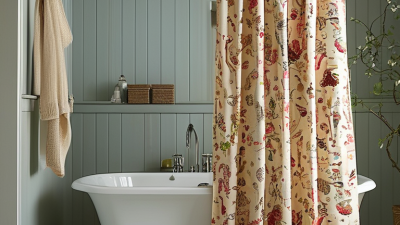
Buying a Bath Curtain for international markets requires more than choosing a pleasant pattern. Size, fabric performance, packaging, care instructions, and regional consumer expectations all matter. A curtain that looks elegant in a showroom may drag across a wet floor, shed odor, or dry too slowly in a small apartment.
Recent market assessments from Grand View Research and Fortune Business Insights show continued demand for bathroom furnishings, supported by renovation activity, hospitality development, and online home-product sales. The U.S. Environmental Protection Agency also emphasizes moisture control because persistent dampness can encourage mold growth. That makes water resistance, ventilation, washable construction, and clear maintenance guidance practical buying criteria, not minor details.
Cleaning expert Dr. Charles Gerba has repeatedly highlighted the hygiene risk of damp bathroom surfaces: “Moisture creates an ideal environment for microbial growth.” The quotation is simple. The purchasing decision is not. Buyers should examine actual dimensions, hem weight, grommet strength, liner compatibility, odor after unpacking, and fabric recovery after washing. Polyester may offer easy care, while cotton can provide a softer appearance but may require faster drying. PEVA and EVA options deserve careful checks for odor, flexibility, and documented material claims.
Reports can guide a decision, but they cannot replace product testing. A sample may behave differently after ten wash cycles. That is where many purchasing plans become less certain. Global buyers should request test records, supplier traceability, and consistent batch specifications before placing large orders. A reliable Bath Curtain is not merely decorative; it must perform beside water, heat, steam, and daily handling.
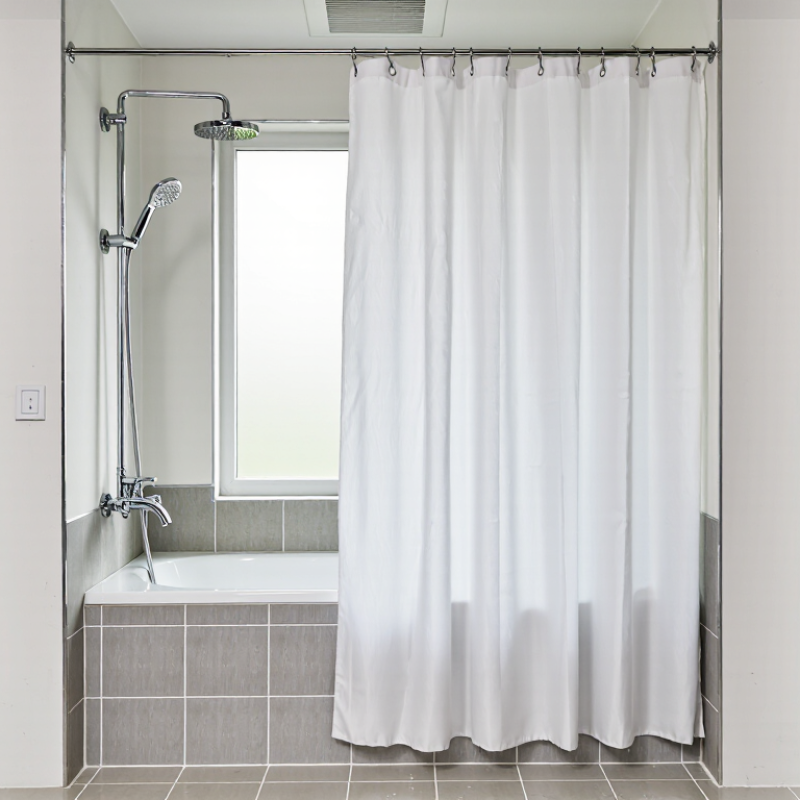
A bath curtain should match the bathroom, not merely fill a product catalog. Measure the shower width, ceiling height, rod position, and floor clearance before discussing quantities. A curtain that stops too high may splash water onto wooden flooring. One that drags can collect dust and moisture.
Study the target market carefully. Families may prefer machine-washable polyester and reinforced top holes. Hotels often need quick-drying fabric, consistent sizing, and replacement availability. In humid coastal areas, mildew-resistant construction and strong ventilation matter more than a heavy appearance. For colder regions, thicker fabric may improve comfort, but it can dry slowly. Ask locally.
I once selected a dense curtain because it looked premium in a showroom. It performed poorly in a small bathroom with weak airflow. That mistake changed my buying checklist. Request fabric samples, inspect stitching, and test whether the bottom edge hangs evenly. Consider privacy, light levels, accessibility, and cleaning habits. Packaging should protect the curtain without creating unnecessary waste. Confirm that materials, labeling, and safety claims fit the destination market’s current requirements. Avoid vague descriptions such as “eco-friendly” without supporting documentation. Small details matter. Specification sheets, inspection records, and clear production tolerances help buyers compare suppliers with greater confidence.

Urbanization is a useful starting point for market selection. Regions with higher urban population shares often have more apartment-based bathrooms, where compact dimensions, moisture resistance, easy installation, and space-saving curtain designs may be especially important. Use this regional view together with local bathroom size, housing type, climate, and consumer preferences before finalizing product specifications.
Data: World Bank, Urban population (% of total population), 2023 regional estimates; values rounded to the nearest whole percent.
Choosing a bath curtain starts with water exposure, not color. The U.S. EPA WaterSense program reports that showers account for nearly 17% of residential indoor water use. That moisture repeatedly hits the curtain, seams, and lower hem. A curtain can look dry while its inner fold stays damp.
Polyester is usually a practical choice for global buyers. Its woven structure dries faster than cotton and handles frequent washing. PEVA offers a soft, waterproof sheet, but odor and flexibility can vary between suppliers. Ask for material composition, thickness, and shrinkage results. “Water-resistant” is not the same as waterproof. The AATCC TM22 spray test rates surface wetting from 0 to 100; request the actual test rating, not only a sales claim. For coated fabrics, ISO 811 hydrostatic-pressure testing can indicate resistance to water penetration.
Check the bottom edge carefully. A weighted hem can reduce movement when ventilation is poor. Reinforced eyelets matter in humid bathrooms. I once trusted a thick curtain that still leaked through its stitched top edge. The fabric was fine. The construction was not. Request colorfastness, seam-strength, and mildew-resistance test records from suppliers. A washable curtain may still need full drying after cleaning. Small details decide long-term performance.
A well-fitting bath curtain begins with accurate measurements. Measure the rod width, then add 10–20 percent for natural folds. Measure from the rod to the tub rim or floor. Do not assume a standard size. I once ordered by room type alone, and the curtain hung several centimeters too short. That small mistake reduced privacy and allowed water to escape. Record measurements in centimeters and inches for clearer international communication. Check whether the package includes hooks, rings, or only the curtain.
Style should support the bathroom’s practical needs. Choose a light-colored curtain for a darker room, or a patterned design to soften plain tiles. Consider fabric weight, transparency, and drying speed. A heavy curtain may look elegant but dry slowly in humid climates. A washable fabric can be useful, while a water-resistant liner offers extra protection. Shorter curtains suit tubs, but full-length designs may work better with walk-in showers. Test a sample when color accuracy matters.
Compatibility requires more than matching appearance. Confirm the rod diameter and hook spacing before purchase. Check whether the curtain uses buttonholes, eyelets, or sewn loops. Some rods need reinforced pockets, while curved rods require extra width. Verify the curtain’s care instructions, mildew resistance claims, and packaging dimensions. For overseas orders, review material composition and installation guidance carefully. These details are easy to overlook. Even experienced buyers can miss them when product photos seem convincing.
When global buyers assess a bath curtain, appearance is only the starting point. Ask suppliers for fabric weight, weave details, waterproof testing, and stitching photos. A 180-centimeter curtain should hang evenly, with reinforced eyelets and clean hems. Request a production sample before placing a large order. Touch it, wash it, and inspect the seams after drying. Small defects often reveal larger process problems. Clear specifications prevent expensive misunderstandings, especially when measurements differ between markets. Still, one sample cannot represent every shipment perfectly. That limitation deserves attention.
Safety evidence matters as much as softness. Request material declarations, test reports, and chemical-residue information from recognized independent laboratories. Confirm that dyes, coatings, and plastic components meet the destination market’s applicable requirements. Ask whether the curtain resists mold under stated conditions, rather than accepting vague “antibacterial” claims. Check flame-related requirements only where relevant; bathroom products are not covered by identical rules worldwide. Keep document dates and sample codes. Good records make later verification possible. They also expose missing evidence.
Supplier reliability appears in small details. Does the contact answer technical questions directly? Can they explain inspection points, defect limits, packaging, and replacement procedures? Ask for realistic lead times, carton dimensions, and moisture protection during sea transport. A supplier who admits a weakness may be safer than one promising perfection. I learned to compare three written quotations, not only unit prices. One low offer may hide thinner fabric or weak packaging. Review communication after ordering. Delays should be reported early, with evidence and a practical correction plan.
When buying bath curtains globally, compare landed prices, not factory quotes. Request prices for fabric, hooks, packaging, inspection, and delivery separately. A low unit price may hide costly carton dimensions or export fees. In practical sourcing work, I compare at least three suppliers using the same specification sheet. Samples reveal problems.
Ask for a physical sample before placing a bulk order. Check fabric weight, stitching, hem straightness, odor, grommet strength, and water resistance after washing. Measure the sample yourself. A supplier’s stated size can differ by several centimeters. Request color references under daylight, bathroom lighting, and camera light. This detail prevents expensive shade disputes. Still, one sample cannot prove consistent production quality. That is an easy mistake to underestimate.
Plan shipping before approving the purchase order. UNCTAD’s Review of Maritime Transport reports that over 80% of global merchandise trade by volume moves by sea. Compare courier, airfreight, and sea freight using carton count, cubic volume, transit time, duties, and destination charges. Build a buffer for port congestion and customs checks. Drewry’s World Container Index has repeatedly shown sharp weekly freight-rate movements, so a quote may expire quickly. Confirm the shipping term, insurance responsibility, documents, and delivery address in writing. I would also test one small shipment first. It costs more initially, but it exposes weak packaging and incorrect paperwork before a full container does.
| No. | Buying Tip | Specification or Data to Compare | Sample and Quality Check | Indicative Price Planning | Packaging and Global Shipping Planning |
|---|---|---|---|---|---|
| 1 | Choose the correct finished size | Common finished sizes include 72 × 72 in (183 × 183 cm), 72 × 84 in (183 × 213 cm), and 72 × 96 in (183 × 244 cm). Measure the rod height and allow adequate overlap with the bathtub or shower floor. | Request a full-size sample or a measured cut panel. Check that the finished width and length remain within the agreed tolerance, such as ±1 in or ±2.5 cm. | Compare prices by finished size, fabric weight, accessories, and packaging rather than by unit price alone. | Ask for the folded size and carton dimensions for each size. Larger 84 in and 96 in curtains normally require more carton volume. |
| 2 | Compare fabric composition and weight | Typical options include polyester, PEVA, PVC, cotton blends, and recycled polyester. For textile curtains, compare fabric weight in GSM; many mid-weight polyester curtains are approximately 80–150 GSM. | Check opacity, drape, odor, color consistency, tear resistance, and whether the material matches the declared composition. | A heavier or recycled fabric may cost more but can provide better drape, appearance, and positioning for premium retail programs. | Confirm whether fabric weight is measured before or after printing and finishing, because this affects carton weight and freight calculations. |
| 3 | Check water resistance and drying performance | Compare water-repellent finishing, water-shedding behavior, drying time, and resistance to mildew-related staining. Water resistance does not mean the curtain is fully waterproof. | Pour or spray water on the surface, observe whether it beads or wets through, and inspect the curtain after repeated washing or wiping. | Include any finishing, coating, or laboratory testing charges in the total landed-cost comparison. | Confirm that finishing chemicals and product claims comply with the destination market's applicable chemical and consumer-product rules. |
| 4 | Evaluate the header and grommets | Compare reinforced headers, buttonholes, plastic hooks, metal grommets, rust-resistant finishes, and common grommet inner diameters of approximately 1.5–2.5 cm. | Hang the sample and open and close it repeatedly. Check grommet alignment, stitching density, edge reinforcement, and hook compatibility. | Metal grommets and included hooks usually increase the unit cost compared with a basic sewn header. | Separate hooks from curtains only when needed to reduce scratching, tangling, or package damage during transport. |
| 5 | Review construction and seam quality | Check top, side, and bottom hems; straightness; thread security; bar-tack reinforcement; print registration; and the absence of loose threads or skipped stitches. | Pull-test selected seams, inspect both sides under bright light, and compare the approved sample with the production inspection standard. | A four-sided hem, weighted bottom, double stitching, or custom construction should be priced as separate specification upgrades. | Fold curtains with consistent creases and use moisture-resistant inner packaging to reduce wrinkling and transit damage. |
| 6 | Compare print, color, and artwork requirements | Provide artwork dimensions, repeat size, print method, color reference, placement, and acceptable color tolerance. Digital and screen printing may differ in appearance and cost. | Approve a physical color sample or strike-off before bulk production. Review the print from normal retail viewing distance, not only on a monitor. | Custom artwork may involve artwork setup, sample, plate, screen, or color-matching charges in addition to the unit price. | Use barcode labels and carton marks that remain readable after handling and comply with the destination country's language and labeling requirements. |
| 7 | Order samples before comparing bulk quotes | Request a representative sample showing the actual fabric, size, hem, header, print, accessories, and packaging. Ask whether the sample is made from production-grade materials. | Record sample date, specification, measurements, photos, and approval status. Keep the approved sample as the reference for pre-shipment inspection. | Budget separately for sample cost, sample freight, artwork preparation, and possible sample revision charges. | Confirm whether the sample shipment is classified as a document, parcel, or commercial sample and whether customs duties or taxes may apply. |
| 8 | Compare total landed cost, not only factory price | Build the comparison from product price, packaging, inspection, inland transport, export handling, freight, insurance, duty, tax, customs clearance, and destination delivery. | Use the same specification and quantity when comparing quotations. Ask suppliers to state the quotation currency, trade term, validity period, and included services. | Compare quotations under the same Incoterm, such as EXW, FOB, CIF, or DDP, because the buyer's responsibilities differ under each term. | Request carton count, net weight, gross weight, carton dimensions, total CBM, and loading quantity before selecting a shipping method. |
| 9 | Plan carton efficiency and container loading | Calculate carton volume with: Length × Width × Height ÷ 1,000,000 = CBM when dimensions are in centimeters. Also compare units per carton and cartons per pallet. | Inspect whether folding creates permanent creases, whether products are compressed excessively, and whether the inner packaging protects the curtain from moisture and abrasion. | A lower unit price may be offset by inefficient packaging, low units per carton, or higher dimensional freight charges. | Select cartons strong enough for stacking. Confirm carton dimensions against the carrier's weight and size limits and estimate container utilization before placing the order. |
| 10 | Set quality, compliance, and delivery checkpoints | Define acceptable quality limits for measurements, stains, holes, loose threads, color variation, odor, missing accessories, packaging, and labeling before production starts. | Use a pre-production sample, during-production check, and pre-shipment inspection. Confirm care labels, fiber-content labels, country-of-origin marking, and packaging symbols where required. | Agree on payment milestones, inspection responsibility, rework terms, and the remedy for quantity shortages or non-conforming goods. | Build a schedule covering sample approval, production, inspection, booking, export clearance, transit, import clearance, and final delivery. Add contingency time for customs or port delays. |