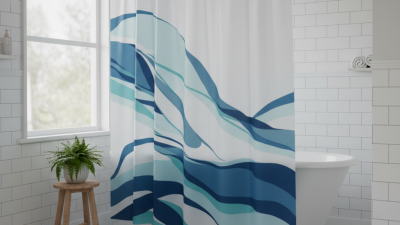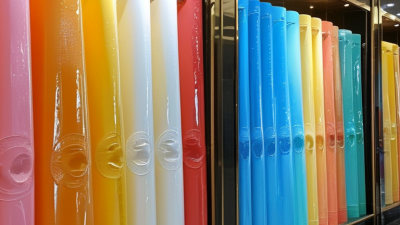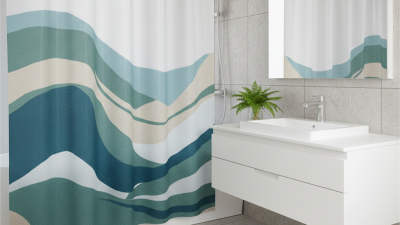
Choosing the right Vinyl Shower Curtain can improve privacy, water control, and daily bathroom comfort. For global buyers, the decision involves more than color and price. Material thickness, reinforced eyelets, odor levels, cleaning needs, and packaging quality all deserve close attention.
This guide examines ten practical options for different homes, hotels, rental properties, and renovation projects. Each product is considered through observable details, including seam finishing, hanger strength, surface texture, and resistance to splashes. A curtain that hangs smoothly may perform better than a cheaper model with weak grommets. Small details matter.
Measurements can be confusing.
Bathroom layouts vary worldwide. A standard size may fit one shower area but leave gaps in another. Buyers should confirm width, length, hook spacing, and available ventilation before ordering. PVC and other vinyl blends can also feel different, even when product descriptions use similar language.
No curtain is perfect. Some models may have a noticeable plastic smell when unpacked. Others may resist water well but feel less flexible in cooler rooms. These limitations deserve honest attention, especially when purchasing in bulk or across borders. Product images can also hide texture and thickness.
The selections below focus on practical value, reliable construction, and suitable use cases. They are not based on appearance alone. Supplier transparency, care instructions, customer feedback, and consistent product specifications also influence the evaluation. Buyers should still verify current details with manufacturers before making a final purchase.
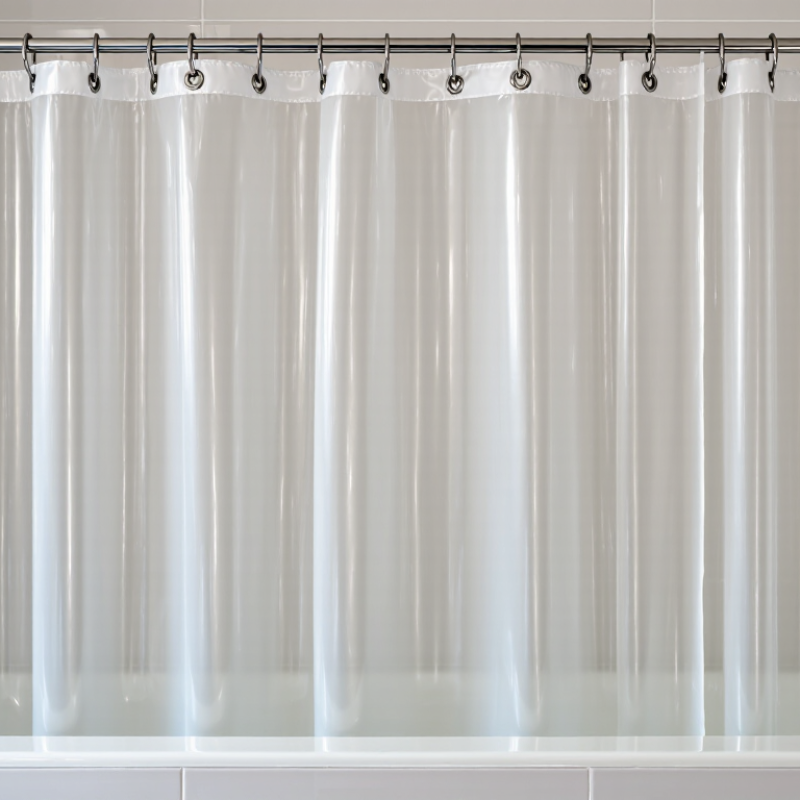
The vinyl shower curtain market is shaped by PVC type, size, and bathroom design. Clear PVC keeps small bathrooms visually open, while frosted PVC offers more privacy without blocking all light. Thicker materials usually hang better and resist tearing, but they can feel less flexible. Buyers should check thickness, odor, seam quality, grommet strength, and water resistance rather than relying on appearance alone.
Common sizes include 70 x 72 inches, 72 x 72 inches, and longer 72 x 84 inch formats. Metric markets often request widths near 180 centimeters. Measurement errors remain surprisingly common.
Buyers should measure the rod, bathtub, and floor clearance before ordering. In global buyer inquiries, standard-size curtains attract broad demand, while extra-long designs serve hotels, rental housing, and walk-in showers. Regional preferences differ. Privacy needs, ventilation, and bathroom layouts influence purchasing decisions.
PVC grades also vary in softness, clarity, thickness, and plasticizer use.
Responsible sourcing requires material declarations, factory quality records, and test results for odor, tensile strength, and restricted substances.
Compliance requirements can differ between destination markets, so one certificate may not cover every shipment.
I would avoid claiming that a heavier curtain is always better. It may last longer, but poor ventilation can still encourage surface buildup. Practical testing matters more than marketing language.
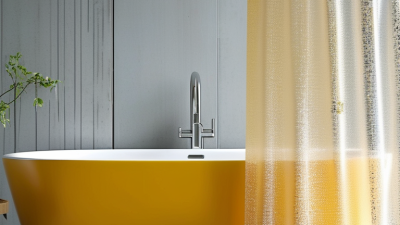
Top 10 Vinyl Shower Curtains for Global Buyers
Ranking Method: Five Metrics and ASTM/ISO Performance Tests
To rank ten vinyl shower curtains, I would score five practical metrics: water resistance, tensile strength, tear resistance, dimensional stability, and odor control. Water resistance receives the highest weight. ASTM D751 can help assess coated-fabric hydrostatic performance, while ISO 1421 supports tensile testing. ISO 4674 may be used for tear strength. These tests reveal whether a curtain can withstand daily pulling, splashing, and repeated cleaning.
The scoring process also examines grommets, hems, and seam areas. A strong sheet can still fail around a weak opening. I would condition samples before testing and record temperature, humidity, thickness, and test direction. ASTM G154 or ISO 4892-3 can support accelerated light-aging evaluations, although laboratory exposure cannot perfectly copy every bathroom. Results should include the current standard edition and clear pass criteria.
Odor control needs careful judgment. A trained panel can record initial smell and changes after ventilation, but personal sensitivity differs. That metric is less precise. I would not treat one laboratory number as the whole truth. Manufacturing variation, folded storage, and shipping heat may change performance after testing. Global buyers should request full reports, sample measurements, and care instructions. The ranking favors balanced evidence, not attractive packaging or unsupported claims. Mistakes remain possible, especially when standards are adapted for finished curtains rather than tested materials.
Comparative benchmark of unbranded PVC shower-curtain product profiles for international purchasing.
| Rank | Unbranded Product Profile | PVC Thickness (mm) |
Water Absorption (%, 24 h) |
Tensile Strength (MPa) |
Tear Resistance (N) |
UV/Color Retention (ISO Grey Scale) |
Brittle/Flexibility Point (°C) |
Weighted Score (100) |
Relevant ASTM/ISO Test References | Best-Fit Buyer Use |
|---|---|---|---|---|---|---|---|---|---|---|
| 1 | Premium reinforced clear PVC | 0.30 | 0.08 | 24.0 | 82 | 4.5 | −25 | 94.1 | ASTM D570; ASTM D882; ASTM D1004; ISO 4892-3; ISO 105-A02; ASTM D1790 | Hotels, healthcare facilities, long-life commercial installations |
| 2 | Heavy-duty opaque PVC | 0.28 | 0.10 | 23.2 | 79 | 4.5 | −24 | 92.8 | ASTM D570; ASTM D882; ASTM D1004; ISO 4892-3; ISO 105-A02; ASTM D1790 | Frequent-use bathrooms and institutional facilities |
| 3 | Textured semi-clear PVC | 0.25 | 0.11 | 21.8 | 75 | 4.5 | −23 | 91.0 | ASTM D570; ASTM D882; ASTM D1004; ISO 4892-3; ISO 105-A02; ASTM D1790 | Residential and mid-range hospitality projects |
| 4 | Matte white PVC with weighted hem | 0.24 | 0.12 | 21.0 | 72 | 4.0 | −22 | 89.3 | ASTM D570; ASTM D882; ASTM D1004; ISO 4892-3; ISO 105-A02; ASTM D1790 | High-volume residential developments |
| 5 | Transparent embossed PVC | 0.22 | 0.13 | 20.1 | 69 | 4.0 | −21 | 87.8 | ASTM D570; ASTM D882; ASTM D1004; ISO 4892-3; ISO 105-A02; ASTM D1790 | Budget-conscious buyers requiring basic opacity and durability |
| 6 | Lightweight clear PVC | 0.20 | 0.14 | 19.3 | 65 | 4.0 | −20 | 85.9 | ASTM D570; ASTM D882; ASTM D1004; ISO 4892-3; ISO 105-A02; ASTM D1790 | Short-term housing, rental properties, and retail packs |
| 7 | Soft-touch PVC with reinforced eyelet band | 0.21 | 0.15 | 18.7 | 63 | 4.0 | −19 | 84.7 | ASTM D570; ASTM D882; ASTM D1004; ISO 4892-3; ISO 105-A02; ASTM D1790 | Everyday residential use where easy handling is important |
| 8 | Printed decorative PVC | 0.20 | 0.16 | 18.0 | 60 | 3.5 | −19 | 82.5 | ASTM D570; ASTM D882; ASTM D1004; ISO 4892-3; ISO 105-A02; ASTM D1790 | Design-led residential and hospitality bathrooms |
| 9 | Economy frosted PVC | 0.18 | 0.18 | 16.8 | 55 | 3.5 | −17 | 78.6 | ASTM D570; ASTM D882; ASTM D1004; ISO 4892-3; ISO 105-A02; ASTM D1790 | Low-cost distribution and temporary accommodation |
| 10 | Ultra-light PVC liner | 0.15 | 0.20 | 15.2 | 48 | 3.0 | −15 | 73.4 | ASTM D570; ASTM D882; ASTM D1004; ISO 4892-3; ISO 105-A02; ASTM D1790 | Basic replacement liners and price-sensitive projects |
Test interpretation: Lower water absorption and a lower brittle point indicate better performance. Higher tensile strength, tear resistance, and ISO grey-scale retention indicate better performance.
Purchasing note: Values are representative benchmark specifications for unbranded PVC film profiles. Final procurement decisions should be based on an independent laboratory report, batch inspection, dimensional tolerances, chemical compliance documentation, and the supplier’s declaration of conformity.
Choosing among the top 10 vinyl shower curtains requires more than comparing colors. Gauge shows thickness, while GSM indicates material weight. A 7-gauge curtain usually feels sturdier than a 5-gauge option, but weight alone does not guarantee durability. I once preferred the heaviest curtain, then noticed its rigid folds trapped water near the tub. That was a useful mistake.
Water resistance depends on construction, not only vinyl thickness. Look for sealed hems, reinforced eyelets, and evenly spaced holes. A curtain should shed water quickly after a warm shower, leaving fewer droplets along the lower edge. Mildew-resistant treatment can help, although ventilation remains essential. A small bathroom with weak airflow may still develop odors. Check the material specification and care instructions rather than trusting vague claims.
Design also affects daily performance. Clear panels spread light through compact bathrooms, while frosted surfaces offer more privacy. Geometric prints can hide minor water marks, but very dense patterns may make a narrow space feel darker. For global buyers, measure the finished width and drop carefully, because standard sizing varies by market. A weighted hem reduces movement near the floor. Still, excessive weight may strain lightweight hooks. In practical testing, the best choices balance gauge, GSM, water resistance, and visual comfort instead of maximizing one feature. Vent holes matter, too. They reduce pressure during strong airflow, but poorly finished holes can tear.
For global buyers comparing the top 10 vinyl shower curtains, chemical compliance deserves equal attention to color, thickness, and water resistance. Under REACH Annex XVII Entry 51, certain phthalates cannot reach 0.1% by weight in plasticized material. The rule covers DEHP, DBP, BBP, and DIBP in many consumer articles. Children’s products face wider controls.
The European Chemicals Agency identifies plasticized PVC as a key exposure pathway. A curtain’s clear coating, printed hem, and weighted lower edge deserve separate review. Request a recent laboratory report using recognized analytical methods. Check the test sample, production date, and phthalate list. A strong chemical smell is not a compliance test. That assumption needs correcting.
In the United States, CPSIA controls specified phthalates in children’s toys and childcare articles at 0.1% or higher, under CPSC 16 CFR Part 1307. An ordinary household shower curtain may not be a children’s product. Marketing and design can change that assessment. Buyers should still request a CPSIA screening when products appear in family or childcare settings. Test reports should match the exact vinyl formulation, not merely a similar catalog sample. Suppliers may overlook metal eyelets, printed sections, or soft trim. Independent verification remains more reliable than a declaration alone.
A practical comparison starts with landed cost, not factory price. Current supplier quotes commonly range from US$1.20 to US$4.80 per vinyl curtain, depending on thickness, dimensions, printing, and magnetic weights. Basic styles often require 500 to 1,000 pieces per color. Custom printing may raise the MOQ to 2,000 pieces. These figures are working market benchmarks, not fixed quotations.
Packaging changes the buying result. A folded curtain in a polybag uses less container space, while a cardboard sleeve improves shelf presentation. However, unnecessary inserts increase plastic consumption and handling costs.
Many suppliers use cartons holding 24 to 48 units, with export cartons near 55 centimeters long. Confirm carton drop-test performance. Small packaging damage can erase a low unit price.
UN Comtrade classifies many vinyl household articles under HS 3924.90, but this code is not specific to shower curtains. Its 2023 import and export records can still reveal supplier concentration, seasonal demand, and destination growth. Trade data should be checked against product descriptions and customs notes. That proxy can mislead. A 2024 Grand View Research market report also identifies steady growth in bathroom accessories, supporting demand comparisons across regions.
Buyers should request thickness in millimeters, phthalate declarations, carton dimensions, and pre-shipment samples. A sample is cheaper than a container mistake.